
EAFP Conference, Heraklion, Crete – September 2025
Proliferative Kidney Disease (PKD) poses an increasingly significant challenge to salmonid health in both wild and farmed populations in the Northern Hemisphere, with implications for biodiversity, fisheries management, and aquaculture sustainability. The disease, caused by the myxozoan endoparasite Tetracapsuloides bryosalmonae, is highly sensitive to environmental conditions, particularly temperature, and its impact is expected to intensify with climate change. Against this backdrop, a dedicated workshop was organised during the EAFP Conference in Heraklion, Crete, in September 2025, to address the urgent need for coordinated research and management strategies. The main aim of this forum was to bring together representatives from industry and academia interested in solving the PKD challenge to salmonid fish health. This event also marked the formal launch of the PKD Network https://pkdnetwork.wordpress.com/, an initiative supported by the Sustainable Aquaculture Innovation Centre (SAIC) and the British Trout Association (BTA).
The workshop attracted more than 80 participants from academia, industry, and conservation sectors, reflecting the broad interest in tackling PKD-related problems. Presentations from trout industry representatives Oliver Robinson (BTA) and Andre Van (Kames Fish Farming Ltd) highlighted the increasing economic burden of PKD on aquaculture and the pressing need for practical solutions. Contributions from Sascha Hallett and Stephen Atkinson from Oregon State University provided novel insights into PKD transmission in wild and hatchery fish populations in the US. Heike Schmidt-Posthaus, from University of Bern, outlined the foundational work conducted in Switzerland on PKD emergence and temperature sensitivity in wild brown trout. Hanna Hartikainen (University of Nottingham) showcased advances in environmental DNA monitoring. Recent developments in vaccine development, and parasite-host interactions were outlined by Jason Holland (University of Aberdeen) and Astrid Holzer (University of Veterinary Medicine Vienna). These talks underscored the complexity of PKD epidemiology and the importance of integrating perspectives from both wild fisheries and aquaculture.
Discussion during the workshop identified the clear industry need for PKD control strategies, which are currently severely constrained by the lack of effective vaccines and treatments. The use of pre-exposure strategies can be more widely adopted but remain limited and unpredictable, due to influence of annual fluctuations in weather and seasonality. There is a clear need for integrated monitoring tools that enable early detection of the parasite and disease, to inform risk prediction and adaptive management. The lack of knowledge about the present and future economic impact of PKD was perceived as a major hurdle. Aquaculture industry and fisheries rely on labour intensive management strategies and suffer from uncertainty in the success of mitigation measures. The economic cost and other burden of such losses is difficult to quantify, as these are often absorbed and occur infrequently. One of the major aims going forward will be to measure and assess the need for monitoring tools and vaccines. This was perceived as a key to raising sufficient funding to develop tools that work for farmers. A critical task in the future therefore is to evaluate economic viability and cost–benefit scenarios for mitigation measures. The PKD Network can take a lead role in facilitating this by linking academia and industry representatives to understand and quantify the impact of PKD in Europe, North America and in other regions where PKD may emerge in the future due to climate change.
The forum also identified several critical research gaps that must be addressed to improve PKD management. Firstly, there is limited understanding of host–parasite interactions, particularly the immune responses of different salmonid species under varying temperature regimes, and the mechanisms underlying parasite persistence and recovery. Secondly, parasite diversity and evolution remain poorly characterised; genetic variation among strains in Europe and North America may influence its virulence and transmission, as well as the efficiency of vaccines. Thirdly, we need a better understanding of the environmental drivers of PKD, including the role of climate change in shaping disease dynamics, and the influence of water quality and flow regimes on outbreak severity.
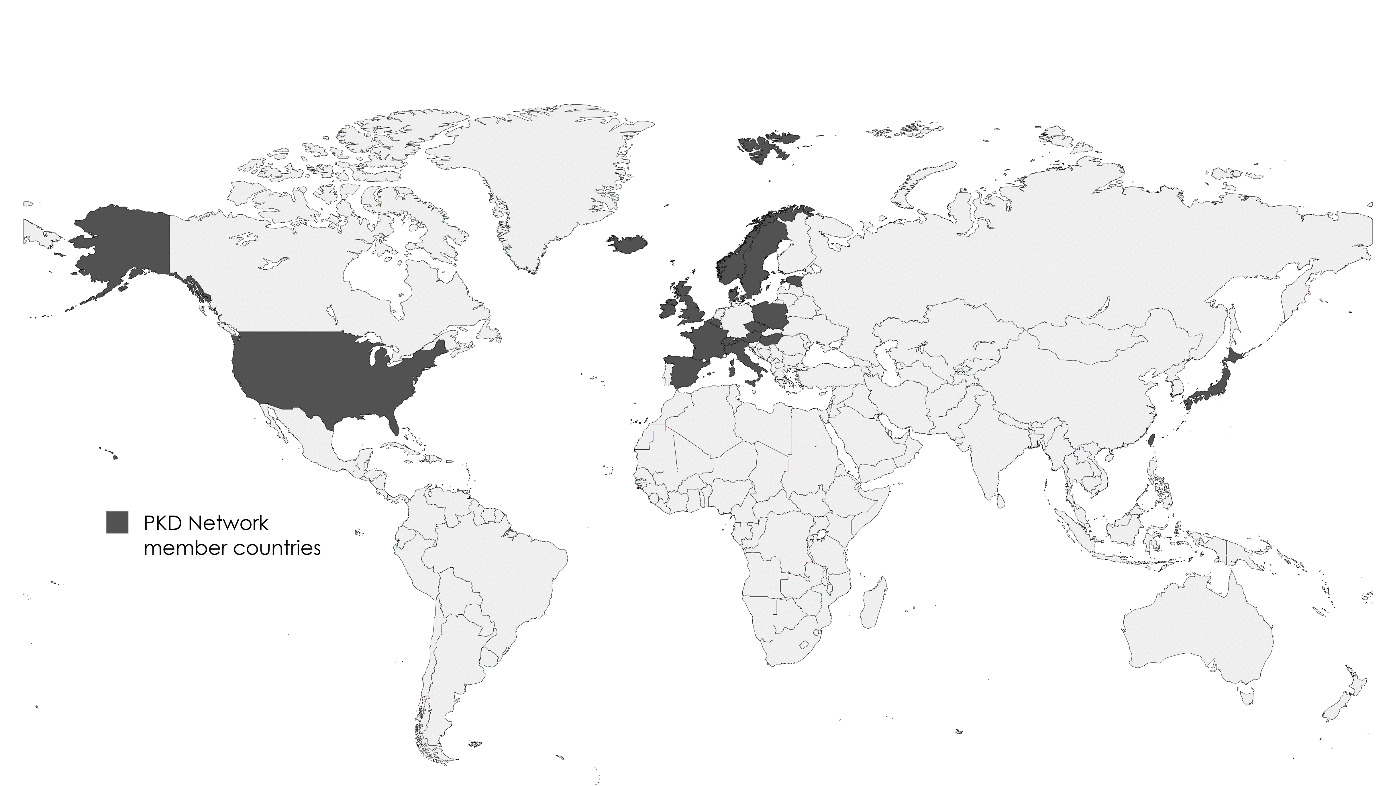
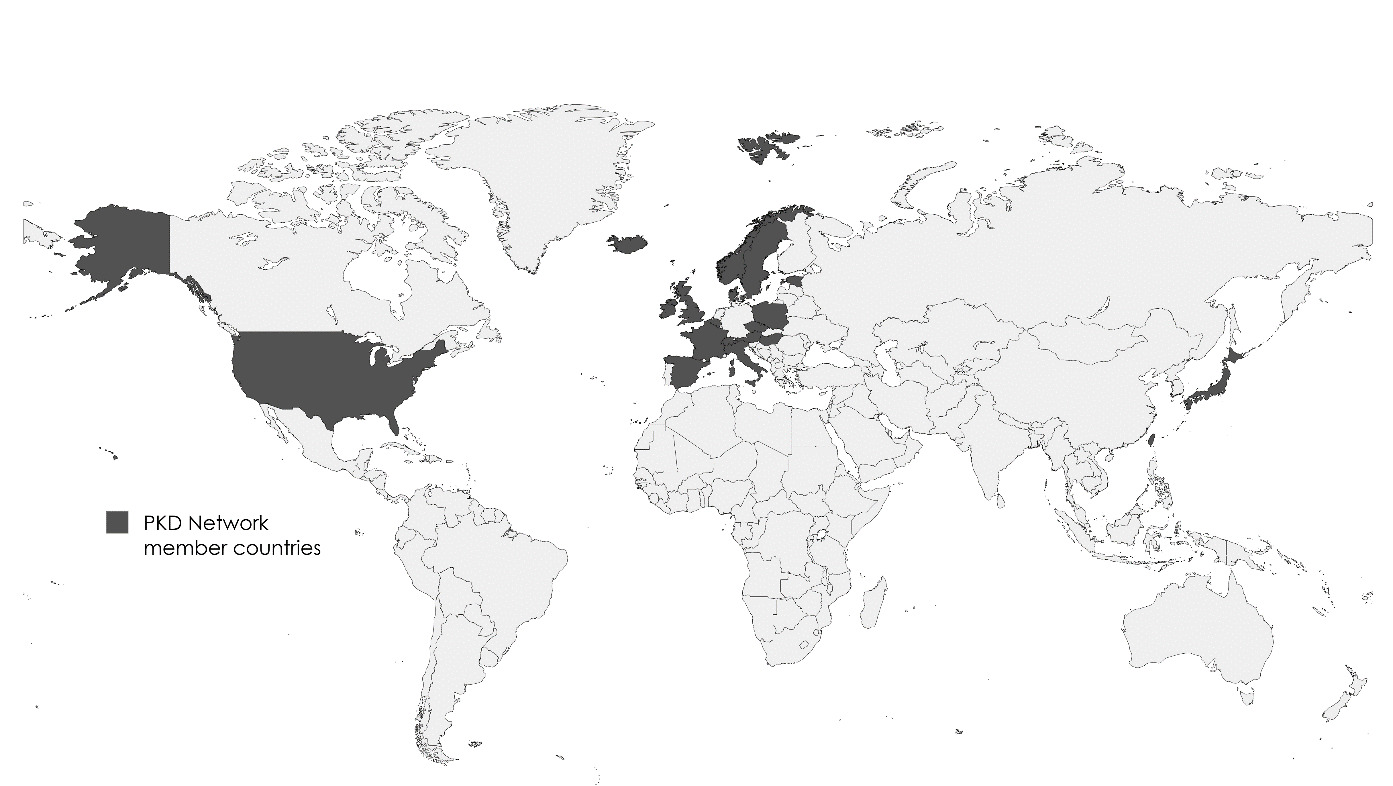
The workshop concluded with strong engagement from participants, with 68 individuals from a range of countries expressing interest by joining the PKD Network (Fig.1). The participants highlighted the need for the development of controlled laboratory systems capable of simulating environmental conditions and supporting the fish-bryozoan lifecycle. Multiple avenues of ongoing PKD-related work were discussed, ranging from characterisation of the PKD parasite in areas of recent emergence, such as the Great Lakes, to large scale eDNA screening in the Nordic regions. The adoption of a broader range of tools to combat PKD, including anti-inflammatory approaches was also recognised as an important development, alongside the focus on vaccines. Finally, the participants emphasised the need for closer industry-research collaboration and more open communication of the economic impacts of PKD and current research questions being investigated.
The newly established PKD Network will serve as a platform for collaboration and knowledge exchange. A major objective is the preparation of proposals to provide dedicated support for networking activities and capacity building across Europe. Additional priorities include conducting market surveys to assess the economic cost of PKD, harmonising monitoring approaches, and fostering data sharing among stakeholders.
Contributions from members and interested parties are welcome, and you can join the mailing list via our dedicated website https://pkdnetwork.wordpress.com/. The next in-person meeting is planned for the 10th International Symposium on Aquatic Animal Health in Bodø, Norway, 21st to 25th September 2026, with possible hybrid access to enable broad participation.
The PKD Network represents an important step toward building a coordinated, interdisciplinary response to one of the most pressing diseases affecting salmonid health. By addressing the identified research gaps and promoting collaboration between academia and industry, the network will deliver practical solutions that safeguard fish health and support sustainable aquaculture and fisheries management.