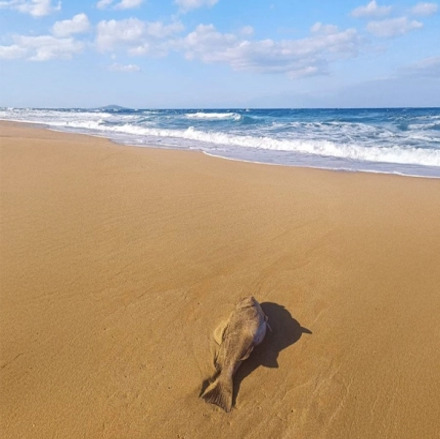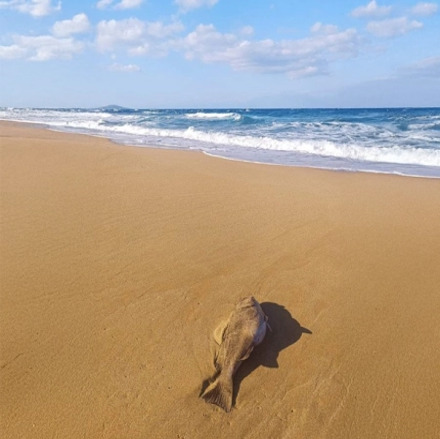
From the 1st to the 4th of September 2025, the 22nd International Conference on Diseases of Fish and Shellfish, organized by the European Association of Fish Pathologists (EAFP), was held in Heraklion, Greece. Within this international context, a dedicated workshop entitled “Nodavirus in wild fish: addressing the Mediterranean grouper mortality crisis” took place on the 3rd of September. This workshop represented the first coordinated scientific initiative focused entirely on understanding the increasing mortality events associated with Betanodavirus infection in wild groupers across the Mediterranean Sea, where unprecedented mortality levels have been recorded in Spain, Italy and Greece during the past two years. Betanodavirus infection is the causative agent of Viral Nervous Necrosis (VNN).
The session brought together over 70 delegates, including fish pathologists, physiologists, conservation biologists, representatives from environmental agencies and experts in Mediterranean fisheries and aquaculture. The primary objective was to consolidate existing knowledge, compare recent findings from different regions, and stimulate collaborative strategies for monitoring and mitigating viral outbreaks in both protected and exploited ecosystems.
The workshop included five oral presentations by invited speakers:
-
Dr. Constantinos C. Mylonas (Hellenic Centre for Marine Research, Greece): Dusky grouper (Epinephelus marginatus) reproductive biology
-
Dr. Enrico Volpe (Dep. Veterinary Medical Sciences, University of Bologna, Italy): VNN mortality outbreaks in Northern Mediterranean groupers
-
Dr. Snježana Zrnčić (Croatian Veterinary Institute, Croatia): VNN mortality in the Adriatic Sea
-
Dr. Anna Toffan (Istituto Zooprofilattico Sperimentale delle Venezie, Italy): Wild fish VNN mortality in Italy and Greece in 2024
-
Dr. Pantelis Katharios (Hellenic Centre for Marine Research, Greece): Tracking grouper mortality through citizen engagement in coastal Greece
The first presentation, given by Dr. Constantinos Mylonas, introduced the complex biological and reproductive features of the dusky grouper (Epinephelus marginatus). The talk addressed aspects of natural spawning and recent developments in controlled reproduction in captivity emphasizing the species’ key role in the marine ecosystem.
The second presentation, delivered by Dr. Enrico Volpe, focused on mortality events observed in wild dusky groupers along the northern Mediterranean coastline in Monaco Principality and Italian Marine Protected Areas between 2018 and 2019, with confirmed involvement of Betanodavirus.
The third presentation, by Dr. Snježana Zrnčić, provided an overview of Betanodavirus-associated mortality events detected in the Adriatic Sea, describing their temporal and spatial evolution as well as the diagnostic approaches applied.
The fourth presentation by Dr. Anna Toffan, reported severe mortality events recorded in wild groupers during 2024 in both South Italy and Greece, highlighting the circulation of different variants within the RGNNV genotype.
The last presentation, by Dr. Pantelis Katharios, described a citizen-science monitoring initiative involving divers, fishermen and coastal communities to track grouper mortalities and sample carcasses across Greece.
Each presentation provided novel regional evidence on the impact of VNN on different groupers’ population across the Mediterranean basin and potentially affecting other fish species. The talks highlighted the importance of harmonizing monitoring strategies, integrating molecular surveillance tools and strengthening citizen engagement among research institutions and marine protected areas. Following the presentations, an open discussion allowed participants to exchange perspectives on current challenges and research priorities. Several key themes emerged, including the increasing frequency of mortality events, the role of environmental and climatic drivers in triggering VNN outbreaks and the potential implications for conservation of endangered grouper and other fish species populations. The workshop emphasized the urgent need for improved reporting systems for wild fish mortality, as well as coordinated action among laboratories to characterize circulating viral genotypes including the reassortant strains. Participants also underlined the importance of collaboration between fishermen, divers, citizens, research institutions, aquaculture facilities and marine conservation authorities. Overall, this workshop marked a milestone in recognizing Betanodavirus infection in wild Mediterranean groupers as a major regional, environmental and ecological concern. By bringing together researchers working in different Mediterranean countries, the event laid the foundation for future collaborative studies and standardized surveillance activities.
The participants agreed that a coordinated, long-term effort is needed to support the conservation of endangered species, in particular groupers. The consortium already possesses significant expertise to advance such an initiative; in particular, the Hellenic Centre for Marine Research (HCMR) has reproduced Epinephelus marginatus in its research facilities and has generated a substantial number of juveniles. Building on this capability, a structured release program for restocking could be developed, with critical input from fisheries biologists and marine conservation specialists to ensure that all actions are ecologically sound and scientifically robust. Moreover, since an authorized commercial vaccine for Betanodavirus is already available, juveniles could be vaccinated prior to release to enhance their survival, especially during their vulnerable first year in the marine environment. Implementing such a program would require considerable resources and should therefore be supported by dedicated funding from national agencies and potentially the European Union.
Given the scientific value and high level of engagement generated during the session, participants expressed the intention to continue this collaborative effort within the EAFP framework and to develop joint international projects on Betanodavirus epidemiology in wild fish. The outcomes of these actions will contribute to shaping future coordinated monitoring and conservation strategies in the Mediterranean Sea.