
Introduction
The Mediterranean is among the most vulnerable marine ecosystems to climate change, which is driving significant shifts in biodiversity (Hidalgo et al. 2018). These changes impact all ecological niches, including fish populations, with increasing reports of subtropical and tropical species migrating into the region. Many of these allochthonous species may carry novel microorganisms, raising the risk of emerging diseases in Mediterranean aquaculture (Cascarano et al. 2021).
A key challenge lies in the early detection of such new and emerging pathogens some of which have been previously reported in other regions, and in preparing farmers for potential outbreaks.
Red sea bream iridoviral disease (RSIVD), caused by red sea bream iridovirus (RSIV) of the genus Megalocytivirus, is an emerging epizootic disease having a significant impact on marine and brackish aquaculture systems (WOAH 2021). RSIVD is causing severe mortality in many cultured fish species among which is Asian seabass, Lates calcarifer (Sumithra et al. 2022). Therefore, it may pose a risk for species cultivated in Mediterranean marine aquaculture. Recent outbreaks caused by Lactococcus garvieae, causing significant losses in the farming of European sea bass (ESB), Dicentrarchus labrax and Gilthead sea bream (GSB), Sparus aurata (Salogni et al. 2024; Esposito et al. 2025) in Italy and of Atlantic bluefin tuna, Thunnus thynnus in Central Mediterranean basin (Cortinovis et al. 2025), and infections with Aeromonas veronii biovar sobria detected in Greece and Italy (Smyrli et al. 2017). Present pathogens are already known in Europe but, until recently, generally related to freshwater finfish species.
Climate change is also influencing the seasonality, virulence, and antimicrobial resistance of endemic pathogens by altering environmental conditions and at the same time modifying microbial communities, therefore enhancing likelihood of diseases outbreaks in aquatic environment (Jeyachandran 2025). These changes pose new biosecurity risks that shall be targeted by prevention approaches which combine strict biosecurity measures, increased awareness of abnormal behavior and rapid detection of newly occurring pathogens.
While commercial vaccines are available for the most common diseases, there is a growing need to advance autogenous vaccine development and implement customized vaccination programs tailored to individual farms (Tammas et al. 2024). However, the effectiveness of autogenous vaccines can be compromised by high strain variability within a pathogen, as observed in Vibrio harveyi (Da Fonseca Ferreira et al. 2025). At the same time, infection with several species of the genus Tenacibaculum is becoming more problematic, with no effective vaccines currently available (Ferreira et al. 2023).
Preventing these infectious risks is essential to ensure the long-term sustainability of the aquaculture sector in Mediterranean. The potential emergence of additional pathogens further increases both ecological and economic threats to production.
This workshop reviewed priority pathogens and key challenges, including emerging diseases, surveillance and early detection tools, and artificial intelligence (AI)-based risk assessment, to identify strategies supporting sustainable Mediterranean aquaculture.
Workshop organisation
Total time allocated to the workshop (WS) was one hour and 30 min with six different ten minutes introductory presentation on the topics which are briefly summarised in the following chapters. Up to 100 persons participated the workshop representing fish health managers of the important corporate groups, private practitioners, feed company experts providing technical supports to companies, representatives of research bodies and diagnostic laboratories representing the key players involved in the health management in the Mediterranean area.
Overview of infectious health challenges in Mediterranean Aquaculture
Andrea Marsella & Anna Toffan
The presentation summarised a study based on a systematic review of the literature published between 2014 and 2024, aimed at gathering information on infectious diseases affecting farmed and wild fish species in the Mediterranean Sea (Toffan et al. 2025).
The study aimed to compile information on disease distribution, prevalence, and impact. As most diseases affecting farmed marine species are not listed by the European Union (EU) or World Organisation for Animal Health (WOAH), official data are limited, and assessments in the Mediterranean rely largely on peer-reviewed reports. To assess available information, papers were evaluated using quality criteria for viral, bacterial, and parasitic diseases, including reporting on environmental factors, epidemiology, clinical signs, and diagnostic data. The systematic review identified Betanodaviridae as the most frequently reported viral pathogens, followed by Iridoviridae, associated with Infectious Spleen and Kidney Necrosis (ISKN) and Lymphocystis Disease (LCDV). Among bacterial pathogens, the most commonly reported species were Vibrio alginolyticus, Mycobacterium marinum, and V. harveyi, followed by Aeromonas hydrophila, Photobacterium damselae subsp. piscicida, and Vibrio vulnificus. The most frequently reported parasitic infections were caused by Amyloodinium ocellatum and Lernanthropus kroyeri, followed by Cryptocaryon irritans, Enterospora nucleophila, Ceratothoa oestroides, Ergasilus sieboldi, and Livoneca redmanii. The study emphasizes that climate change is likely to influence the epidemiology of aquatic diseases due to the high sensitivity of marine environments to environmental shifts. As a result, both aquaculture and fisheries require adaptation strategies that include research on climate change impacts on pathogen–host–environment interactions.
A large problem of underreporting and/or under investigating fish mortality has been highlighted. The authors conclude that improved surveillance, systematic reporting, and comprehensive diagnostic investigation of disease outbreaks are essential to mitigate the impact of infectious diseases in the Mediterranean region.
Infectious diseases diagnosed in Mediterranean basin from the network of National Reference Laboratories (NRLs) in Europe
Niccolò Vendramin
Although diseases affecting Mediterranean farmed fish are not officially listed and no formal surveillance exists for European sea bass and gilthead sea bream, the European Union Reference Laboratory (EURL) for Fish and Crustacean Diseases collects diagnostic data from NRLs across Europe. The 2020–2024 dataset includes reports from Portugal, Spain, France, Italy, Slovenia, Croatia, Bosnia and Herzegovina, Greece, Turkiye, Malta and Cyprus. In 2020, reported pathogens included V. harveyi and Tenacibaculum maritimum, with sporadic cases of Viral nervous necrosis (VNN) and A. veronii infection in ESB. For GSB, Sparicotyle chrysophrii was detected, while Lernanthropus kroyeri was reported in ESB. The situation in 2021 was largely similar, with the addition of Ph. damselae subsp. piscicida. In 2022, V. harveyi, T. maritimum in ESB and Sparicotyle infection in GSB remained the main findings. In 2023, L. garvieae was detected for the first time. By 2024, L. garvieae caused severe mortality in the central Tyrrhenian coastal area of Italy, marking it as an emerging pathogen of concern in marine aquaculture.
The second part of the presentation summarised the results of a questionnaire conducted during the EAFP Biosecurity Workshop held in Cesenatico in 2024. The objective was to identify major knowledge gaps that hinder effective decision-making and validation of biosecurity practices. Key gaps identified included i) interaction and disease transmission between wild and farmed fish; ii) water testing through detection of environmental nucleic acids (eNAs) and disinfection protocols; iii) limited understanding of pathogen viability and transmission pathways; iv) health certification to ensure safe trade of live fish; v) insufficient health monitoring and vaccination programs.
Conclusively, there is a need to validate disinfection procedures, develop harmonised health certification to ensure safe trade of live animals, enhance water testing strategies, and promote research on disease epidemiology to strengthen disease prevention and control in Mediterranean aquaculture.
Mediterranean Marine Lactococcosis
Luana Cortinovis
The presentation focused on piscine lactococcosis, summarising key features of recent outbreaks, including epidemiological patterns, clinical signs, diagnostics, and disease management. It included outbreaks affecting ESB (Salogni et al. 2024) and GSB (Esposito et al. 2025) in Italy, and Atlantic bluefin tuna (Cortinovis et al. 2025) in Central Mediterranean related to L. garvieae infection. Although lactococcosis in Europe has historically been associated with freshwater fish, outbreaks since 2023 in Italian mariculture and in tuna farming represent emerging marine cases of acute haemorrhagic septicaemia at water temperatures above 18 °C, affecting subadult and adult fish. The pathogen has a broad host range, infecting cultured and wild freshwater and marine fish, octopi, marine mammals, several terrestrial animals, and occasionally humans, where it has been linked to endocarditis in immunocompromised patients. The disease in fish is characterised by a rapid onset and high mortality, with fast spread across cages and tanks. Affected fish may show erratic swimming, exophthalmia and ocular lesions, hypermelanosis, and anorexia; internally, endocarditis, splenomegaly, and multiorgan congestion and hemorrhages are common. Diagnostic approaches include bacteriology and phenotypic identification using API Rapid ID 32 Strep and MALDI-tof; however, these methods cannot reliably differentiate among the three Lactococcus species (L. garvieae, L. petauri and L. formosensis) to date associated with piscine lactococcosis. Accurate species identification requires molecular tools such as amplification and sequencing of gyrB gene (Barbanti et al. 2024), SNPs analysis in the ITS1 region (Stoppani et al. 2023), multiplex qPCR (Shanin et al. 2025), or whole-genome sequencing.
Disease management remains highly challenging due to recurrent outbreaks driven by pathogen persistence in fish and environment. High mortalities, difficulties in timely carcass removal, challenging antimicrobial administration due to anorexia in sick fish and co-infections further complicate control. The efficacy of autogenous vaccines is now under investigation.
In conclusion, lactococcosis represents a major emerging threat to Mediterranean aquaculture. At least two serotypes are currently circulating, and although the disease has not yet spread to new regions, continued surveillance, improved diagnostics, and strengthened biosecurity are essential.
A genomic look at Aeromonas veronii in Mediterranean
Pantelis Katharios
A. veronii is a recently identified pathogen affecting exclusively ESB. It was first reported in Greece in 2008 (Smyrli et al. 2017) and was characterized by high mortality, requires continuous antibiotic treatment, and primarily affects larger fish when seawater temperatures exceed 22–23 °C, although the bacteria can be detected in fish throughout the year. Clinical signs include hemolytic anemia, jaundice, internal nodules in the spleen and other organs. Phenotypically, three distinct groups have been identified: i) motile, pigment-producing; ii) non-motile, non-pigment-producing; and iii) motile, non-pigment-producing strains. Vaccination with autogenous vaccines has shown promising results, with relative percent survival (RPS) values of 84% after bath vaccination of juveniles and 62.5% following intraperitoneal vaccination of adults.
Out of nearly 150 isolates, 50 were subjected to whole-genome sequencing (WGS) to identify and compare virulence- and antigenicity-associated proteins in silico. Key virulence factors detected include those involved in secretion systems (T3SS, T6SS), toxins (aerolysin, hemolysins, RTX toxin, hemagglutinin), iron acquisition systems (siderophores, TonB receptors, ABC transporters, Fur), motility, and adhesion (flagellar proteins, T4 pili, MSHA). Major antigenic proteins predicted were porins, OmpK, maltoporin, secreted proteins, T3SS components, and TonB receptors.
Experimental challenge trials with two A. veronii strains were conducted to investigate host–pathogen interactions. Transcriptomic responses indicated that both strains triggered a classical antibacterial immune reaction characterized by inflammation and antimicrobial defense, accompanied by trade-offs affecting growth and tissue integrity. Each strain, however, demonstrated distinct virulence strategies. Future work will focus on elucidating detailed pathogenesis mechanisms of A. veronii, defining host–pathogen interaction dynamics, refining antigen selection for vaccine development, and determining why susceptibility is limited to seabass within the Mediterranean.
Red Sea Bream Iridovirus (RSIV) in Asian Seabass
Chun-Kuei Chang
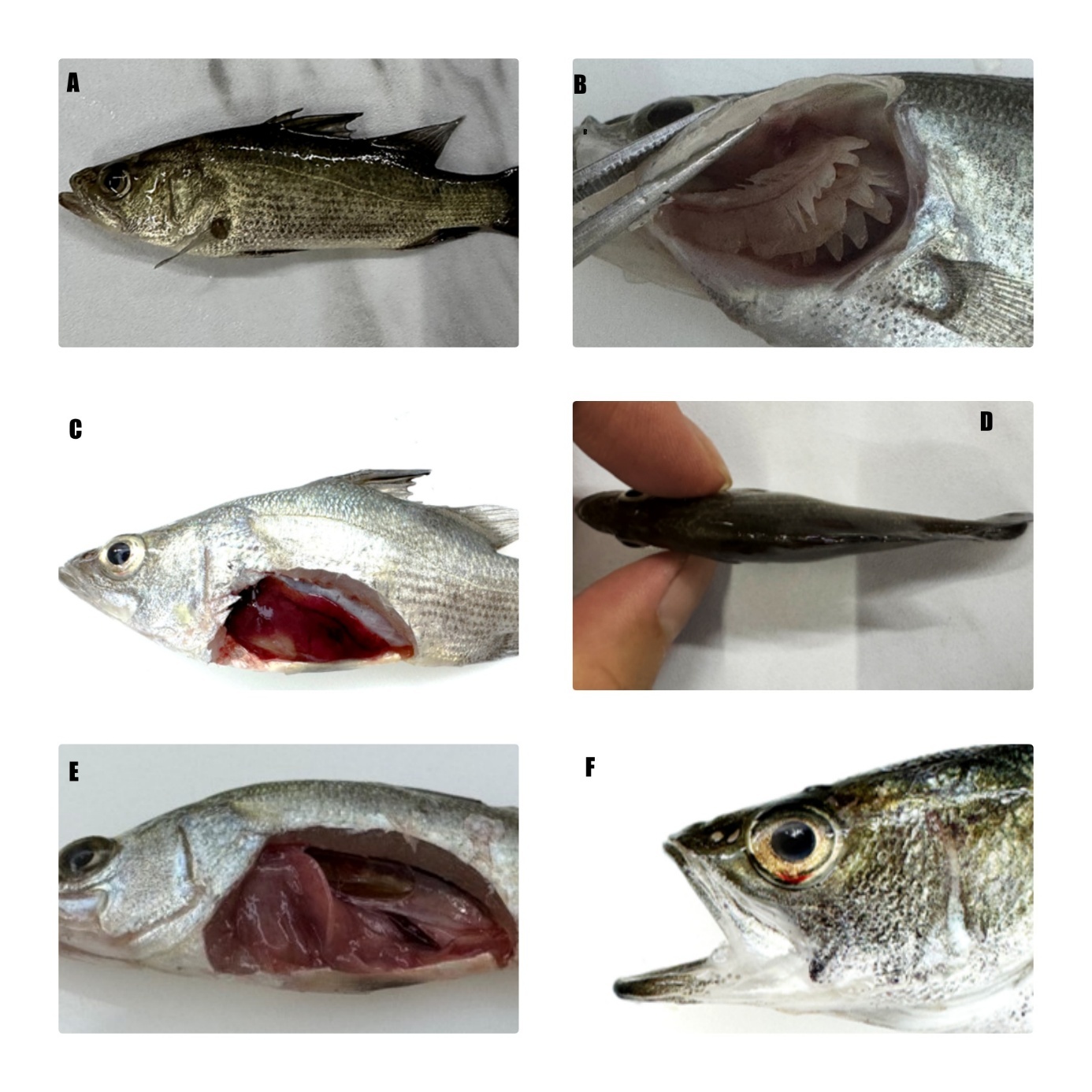
Asian sea bass (Lates calcarifer), also known as barramundi, is an euryhaline species widely distributed across Asian countries (Yue et al. 2024). Red sea bream iridoviral disease (RSIVD) is caused by infection with red sea bream iridovirus (RSIV), a double-stranded DNA virus belonging to the species Megalocytivirus pagrus 1 in the genus Megalocytivirus, within the family Iridoviridae. The first outbreak was reported in farmed red sea bream in Japan (Inouye et al. 1992), and since then, the virus has been detected in more than 30 fish species, predominantly during summer months when water temperatures exceed 25 °C. The disease is transmitted horizontally, and in experimental infections, clinical signs appear 5–7 days post-exposure. Affected fish typically show inappetence, lethargic swimming, abnormal respiratory rate due to severe anemia, petechiae in the gills, and enlarged spleens. Diagnostic procedures are primarily described in the WOAH Diagnostic Manual, and accurate clinical recognition is essential for disease surveillance and response in the Mediterranean region. Early detection of characteristic clinical signs is therefore crucial for effective fish health management should the pathogen emerge in this area (Figure 1).
__pale_gills_(b)__hemorrhage.jpeg)
Autogenous vaccines application in Mediterranean Aquaculture: Challenges and Opportunities
Alain LeBreton
The presentation provided an overview of vaccination practices and a review of vaccines authorised for use in the Mediterranean basin. Most of these vaccines are authorised in European countries, including Türkiye, while there are no available data on vaccines authorised in North African countries (Tunisia, Egypt, Morocco). Vaccine availability differs among countries, but vaccines targeting V. anguillarum, Ph. damselae subsp. piscicida, and Nodavirus red grouper nervous necrosis virus type (RGNNV) are the most commonly represented.
Vaccination is one of the cornerstones of biosecurity measures and plays an important role in preventing antimicrobial resistance (AMR). Meta-analyses of bacteria isolated from aquaculture environments show that the multiple antibiotic resistance (MAR) index defined as the ratio of the number of antibiotic resistances in a strain to the total number of antibiotics tested, often exceeds 0.2. This indicates a significant risk for the emergence of AMR in systems where antibiotics are used.
Fish fry up to 5 g are vaccinated by immersion, while larger fish (10–20 g) are vaccinated by intraperitoneal injection. The control of emerging diseases, such as infections caused by A. veronii, Lactococcus spp., and V. harveyi, remains challenging, and the efficacy of autogenous vaccines is still questionable.
Implementation of vaccination has resulted in economically impactful outcomes in some areas, where infections with V. anguillarum have become almost non-existent. However, several challenges remain in the production of autogenous vaccines, including insufficient production capacity, long manufacturing times (eight to ten weeks), low efficiency, and a shortage of trained staff.
Overall, the high movement of juveniles within the region poses a substantial biosecurity risk. Autogenous vaccines represent an opportunity to address the specific needs of the Mediterranean area, which includes multiple species, emerging pathogens, and diverse pathogen strains, offering a rapid response to evolving disease challenges.
Marinet Progressive Web Application – Innovative Tools for Risk Assessment
Marco Galeotti
The Interreg Italy–Croatia project Marinet (MARICULTURE NETWORK: Implementation of new technologies for diversified, sustainable aquaculture targeting a healthy society and competitive regions) aims to improve biosecurity and health management in Adriatic mariculture through the use of technological tools. A progressive web application (PWA) has been developed as a user-friendly tool for recording operational welfare indicators (OWIs), including environmental, group, and individual indicators, using a smartphone or tablet (Tomè 2025). The PWA serves as the central hub in which all the different types of data are integrated. Environmental OWIs are primarily recorded via sensors/multiparametric probes installed at the farm, which continuously collect data and store them in a database. Group and individual OWIs are entered into the PWA on a daily basis by operators, most often the farm manager. The PWA integrates meteorological and marine data from sensor and public provider, CMEMS (Copernicus Marine Environment Monitoring Service). All collected data, together with historical datasets prepared by project partners, are fed into AI algorithms in real time. Machine learning (ML) models analyze trends based on historical and real-time data, enabling proactive decision-making by farmers. AI is also used to identify unusual patterns in the data, helping to detect environmental changes or emerging fish health risks. Models developed within the project analyze the complete dataset, from on-site sensor measurements and weather and marine forecasts to daily operator inputs searching for patterns and correlations associated with critical situations. In ML training, the ResNet-18 model (a Convolutional Neural Network) was used (Portelli et al. 2026)
The system aims to move beyond simple threshold alerts to predictive warnings that anticipate problems and provide farm-specific recommendations. AI can also identify fish diseases from images: farmers upload photos of lesions to the PWA, and the model suggests possible viral, bacterial, or parasitic conditions based on its image database. Although not a substitute for veterinary diagnosis, this tool supports rapid decision-making on sampling or expert consultation, helping farmers manage fish health and mitigate climate-related impacts.
Discussion and Conclusion
The overall conclusion was that diagnostic capacity within the Mediterranean basin is adequate for the detection of emerging pathogens, including those occurring in the region for the first time. Nevertheless, communication remains a critical gap, and there is a clear need to establish a formal framework for the systematic collection of epizootiological data from both European and non-European countries, particularly in relation to newly emerging diseases. Although the EURL for fish and crustacean diseases collects report of laboratory diagnosis from NRLs and field experts, a coordinated and fully systematic approach is still lacking.
This gap is being addressed through Food and Agriculture Organization (FAO) / General Fisheries Commission for the Mediterranean (GFCM) initiatives, whose 2030 Strategy prioritizes stronger scientific coordination on aquatic animal health. A Technical Advisory Group (TAG) under the Committee on Aquaculture promotes harmonized surveillance, diagnostics, and regional cooperation. Initial publications focus on key issues: Lactococcus garvieae outbreaks linked to temperature, antimicrobial use and resistance in Mediterranean aquaculture, and biosecurity in production systems.
To improve information exchange, a secure digital platform within the GFCM Extranet (Viva Engage) enables rapid communication and document sharing among cooperating non contracting partners, strengthening transparency, early warning, and regional coordination. Together, these actions support a more integrated, risk-based, and climate-aware regional strategy for aquatic animal health.