
INTRODUCTION
The Pacific tripletail (Lobotes pacificus) is a coastal fish species distributed along the Eastern Pacific, including Costa Rica. Its ecological and economic relevance has increased in recent years due to its potential for aquaculture development. Previous studies have demonstrated that this species can reach commercial size within relatively short culture periods, with high survival and acceptable fillet yields (Chacón-Guzmán et al. 2019). Despite this potential, baseline information regarding health management and parasite-associated risks in this species remains limited in the region.
Species of the genus Neobenedenia (Monopisthocotylea: Capsalidae), traditionally classified within the Monogenea, are among the most problematic ectoparasites affecting marine teleost fishes, especially in aquaculture and public aquarium facilities. Neobenedenia girellae has been reported infesting more than 100 teleost species worldwide, including economically important taxa such as Seriola spp., Lates calcarifer, and numerous ornamental reef fishes (Whittington and Horton 1996; Brazenor et al. 2018). This broad host range reflects low host specificity and the high potential for spread following the introduction of wild fish into captive systems.
The epidemiological importance of Neobenedenia spp. is closely linked to their direct life cycle, high fecundity, and strong dependence on environmental conditions, particularly temperature. Adult parasites lay eggs that adhere firmly to hard substrates such as tank walls, pipes, nets, and other structures. These eggs hatch into free-swimming oncomiracidia capable of actively locating and infecting new hosts, allowing the entire life cycle to be completed within captive systems without the need for intermediate hosts (Deveney et al. 2001; Brazenor and Hutson 2015; Valles-Vega et al. 2019). Under tropical conditions, accelerated development and continuous reproduction may lead to rapid parasite population growth and delayed clinical outbreaks if control measures do not target all developmental stages.
Caligid copepods of the genus Caligus are also common ectoparasites of marine fish in both wild and cultured populations. In captive environments, they may contribute to epithelial damage, stress, and increased susceptibility to secondary infections, particularly under high stocking densities or cases of co-infestations (Johnson et al. 2004). Although often detected at low abundance, their presence may exacerbate the overall impact of ectoparasite assemblages in confined systems.
The identification of parasite species capable of persisting and spreading under captive conditions is fundamental for effective fish health management. Ectoparasites such as Neobenedenia spp. and Caligus spp. differ in life-cycle duration, environmental resistance, and susceptibility to chemotherapeutic treatments. Consequently, quarantine protocols that are not supported by accurate parasitological diagnosis may fail to eliminate resistant life stages, allowing subclinical infections in wild-caught fish to establish and amplify within captive systems. Targeted treatments aligned with parasite biology reduce transmission risk to resident stocks, minimise repeated chemical exposure, and support animal welfare and biosecurity in aquaculture facilities and public aquaria.
This case study reports the association of Neobenedenia sp. and Caligus sp. with wild-caught L. pacificus in Costa Rica. A single parasitised individual captured near Isla Venado was transferred to a marine aquarium, where Neobenedenia sp. was subsequently transmitted to conspecifics under captive conditions. This report highlights the importance of early parasite identification in newly introduced fish to prevent dissemination within closed systems and to inform evidence-based quarantine and treatment protocols.
MATERIALS AND METHODS
Fish collection and housing
In February 2025, a wild specimen of L. pacificus was captured by hook and line near Isla Venado in the Gulf of Nicoya, Costa Rica. The fish was transferred to Parque Marino del Pacífico (Puntarenas, Costa Rica). Upon arrival, it was subjected to a routine prophylactic freshwater bath and later introduced into a closed marine recirculation system containing three organisms of the same species.
The tank had a volume of 30 m3, and conditions were kept constant (salinity 28 ± 1 ppt, dissolved oxygen 6.12 ± 0.5 mg O2/L, temperature 27.8 °C ± 1 °C, and natural photoperiod). Fish were fed every other day with fresh shrimp. Approximately one month later, the fish exhibited abnormal behaviour, including flashing and rubbing against tank surfaces, and localised epithelial lesions. One individual died, prompting parasitological examination of the remaining fish.
Freshwater bath and parasite recovery
Following the observation of clinical signs associated with ectoparasite infestation, freshwater baths were conducted in an independent tank with a capacity of 40 L, using dechlorinated freshwater adjusted to the same temperature as the holding system (27.8 °C). All remaining fish in the system (n = 3) were treated during each bath. Fish were handled using soft nets and each bath lasted 3 min.
Baths were applied every five days based on the temperature-dependent development of Neobenedenia sp. to interrupt the parasite life cycle and prevent reinfestation (Brazenor and Hutson 2015; Valles-Vega et al. 2019).
Following each treatment, sediment from the bath water was collected and examined under a stereomicroscope for parasite recovery. Recovered parasites were counted to assess changes in parasite load over successive treatments.
Taxonomic identification and parasite load estimation
Neobenedenia specimens were processed following conventional staining and mounting techniques: dehydrated through an ethanol series (70%, 80%, 96% and 100%), stained with Mayer’s hematoxylin and eosin, cleared with eugenol, and permanently mounted with synthetic resin. Identification was conducted based on morphological criteria described by Whittington and Horton (1996), including diagnostic features of the haptor and reproductive structures. Morphometric measurements (mean and range) were recorded in micrometers (µm). Given the taxonomic complexity within the genus and the absence of molecular analyses, specimens are referred to conservatively as Neobenedenia sp. Copepods were temporarily mounted on slides for identification based on the taxonomic keys of Kabata (2003).
Parasite load estimation: To estimate parasite load, recovered parasites were counted under a stereomicroscope. The total number of parasites recovered was divided by the number of fish that underwent treatment (n = 3) to calculate the mean intensity of infestation.
RESULTS
Clinical observations and mortality
A wild-caught L. pacificus (2 kg and 45 cm total length) was introduced into a tank with three individuals of the same species (two individuals of 1.5-2 kg and 40 cm total length, and one of 1.2 kg and 35 cm total length). All individuals initially appeared clinically healthy upon arrival. Approximately one month later, the fish began exhibiting signs of ectoparasite infestation, including flashing behaviour and localised epithelial lesions, particularly around the head and eyes. One of the smaller fish died shortly thereafter, prompting a detailed parasitological assessment.
Parasite identification and load
Freshwater baths yielded a total of 17 Neobenedenia sp. and nine Caligus sp. individuals. As parasite burden could not be attributed to individual fish, mean intensity was estimated at 5.7 Neobenedenia sp. and three Caligus sp. per treated fish.
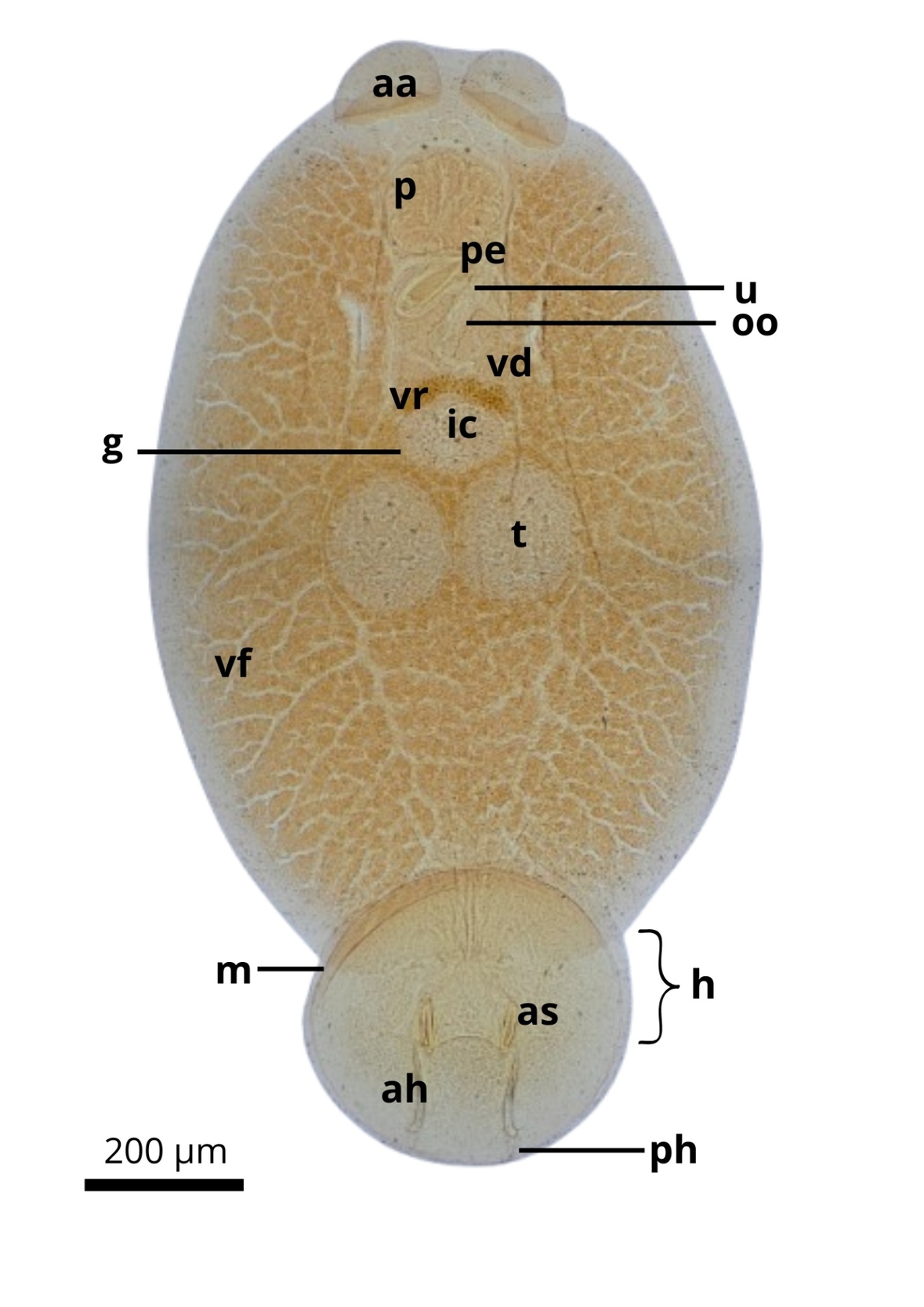
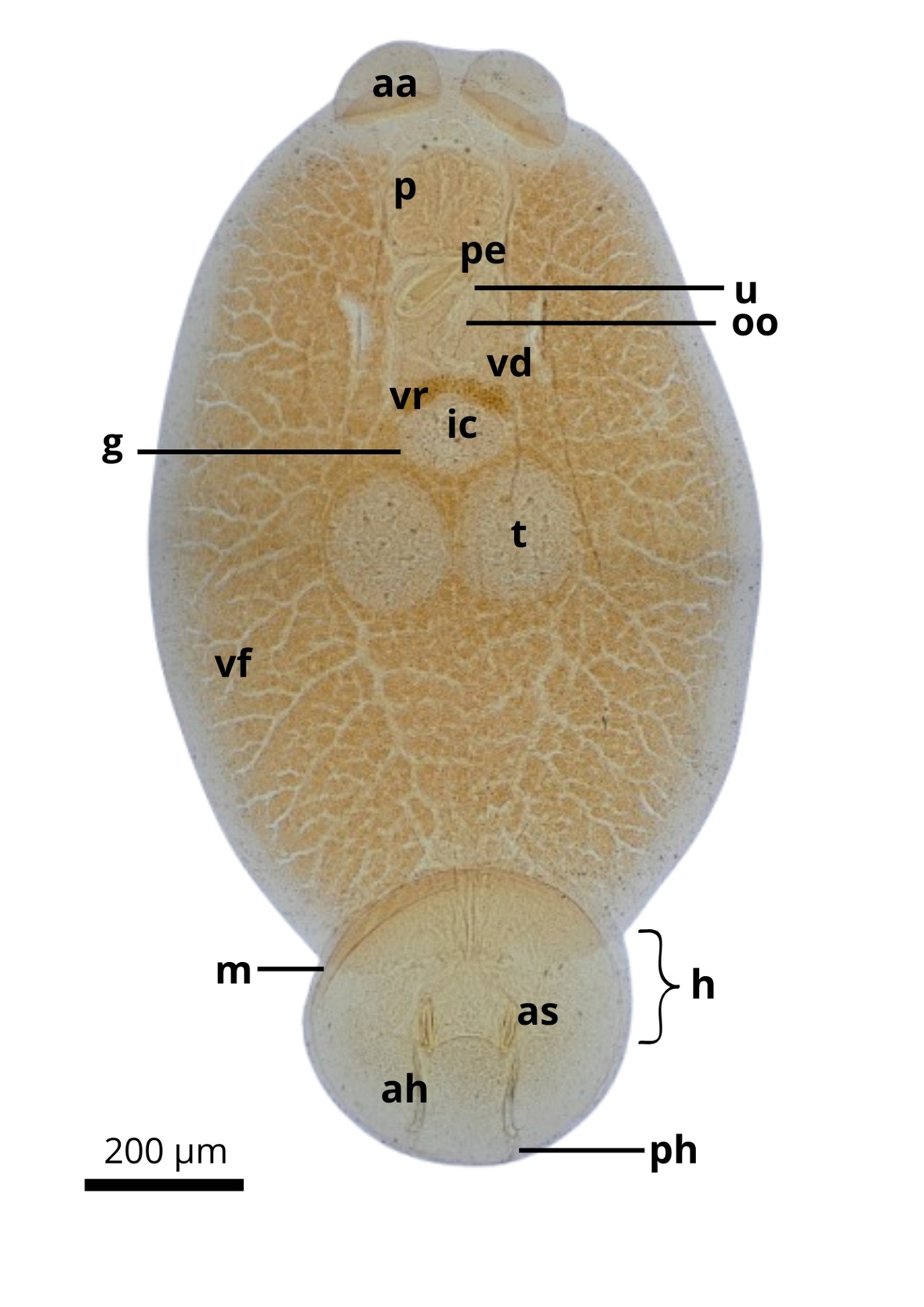
Morphometric data were obtained from fixed and stained specimens. Neobenedenia sp. measured 4127 µm (2485-6540) in total length and 2133 µm (1234-2959) in width. The haptor measured 1083 µm (664-1548) in width (Fig. 1). Neobenedenia sp. presented an elongate dorsoventrally flattened body with a well-developed haptor equipped with anterior and posterior hamuli, marginal hooks, and accessory sclerites. The specimens exhibited two pairs of eyespots, a median germarium, and paired postero-medially positioned testes (Fig. 1).
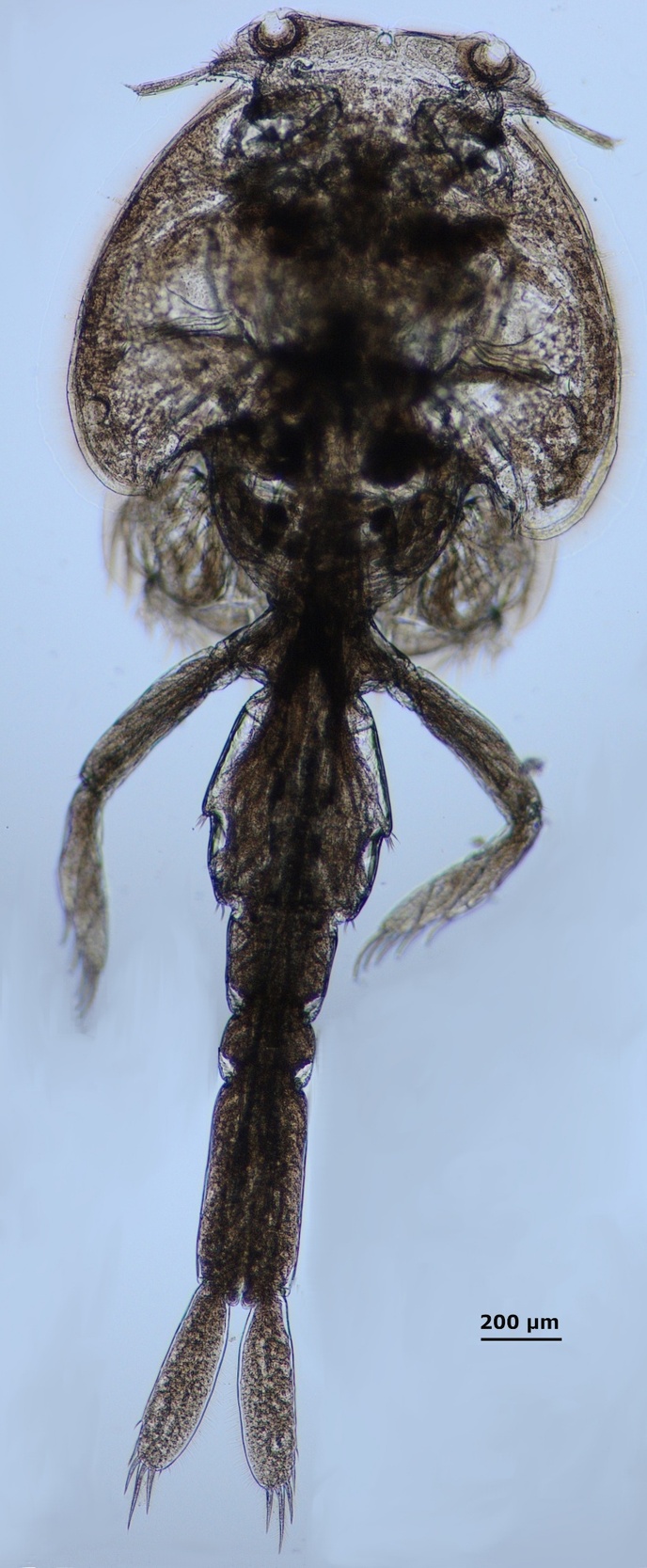
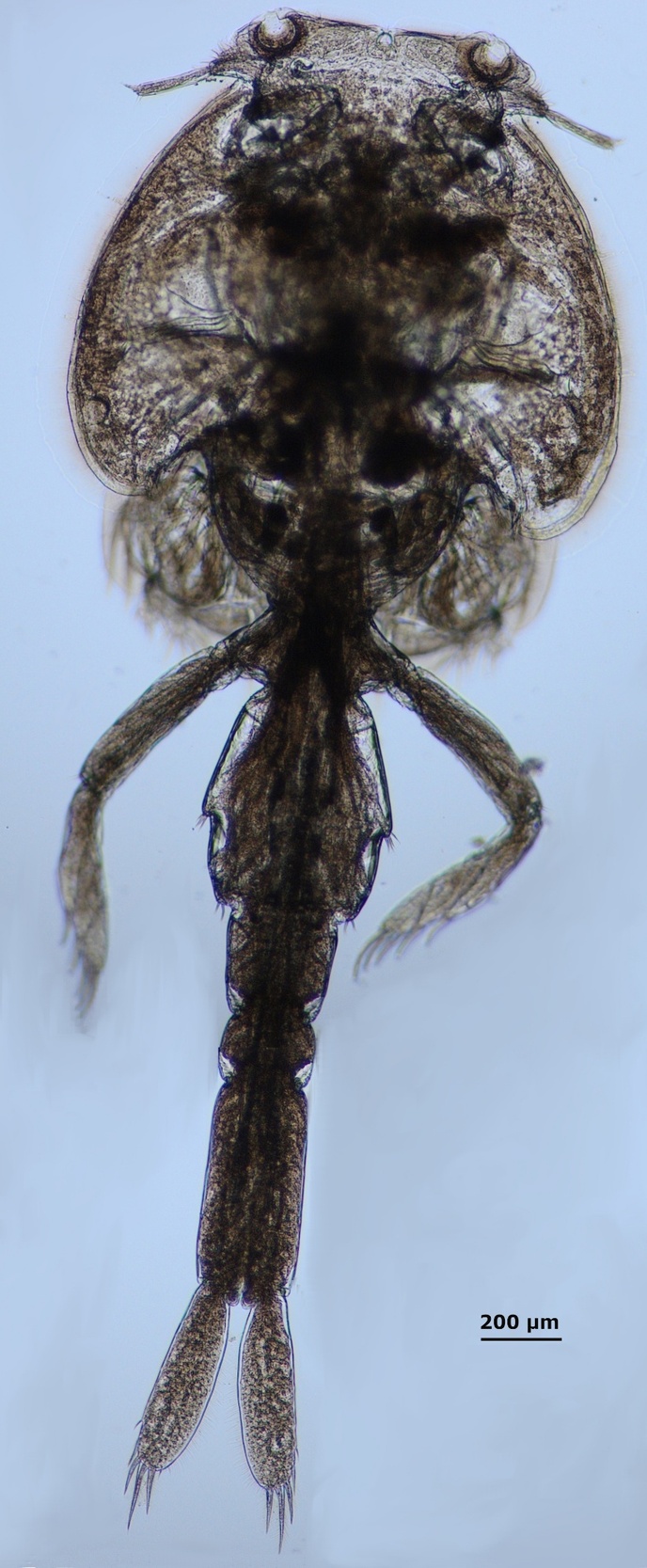
All recovered Caligus sp. corresponded to the adult male stage. An adult male specimen is shown in Fig. 2. The specimen exhibited characteristic features of the genus, including a dorsoventrally compressed cephalothorax, visible lunules, and well-developed antennules and maxillipeds adapted for attachment. The genital complex was bilobed and located posteriorly to the cephalothoracic shield, followed by a distinct abdomen.
Control measures and egg monitoring of Neobenedenia sp.
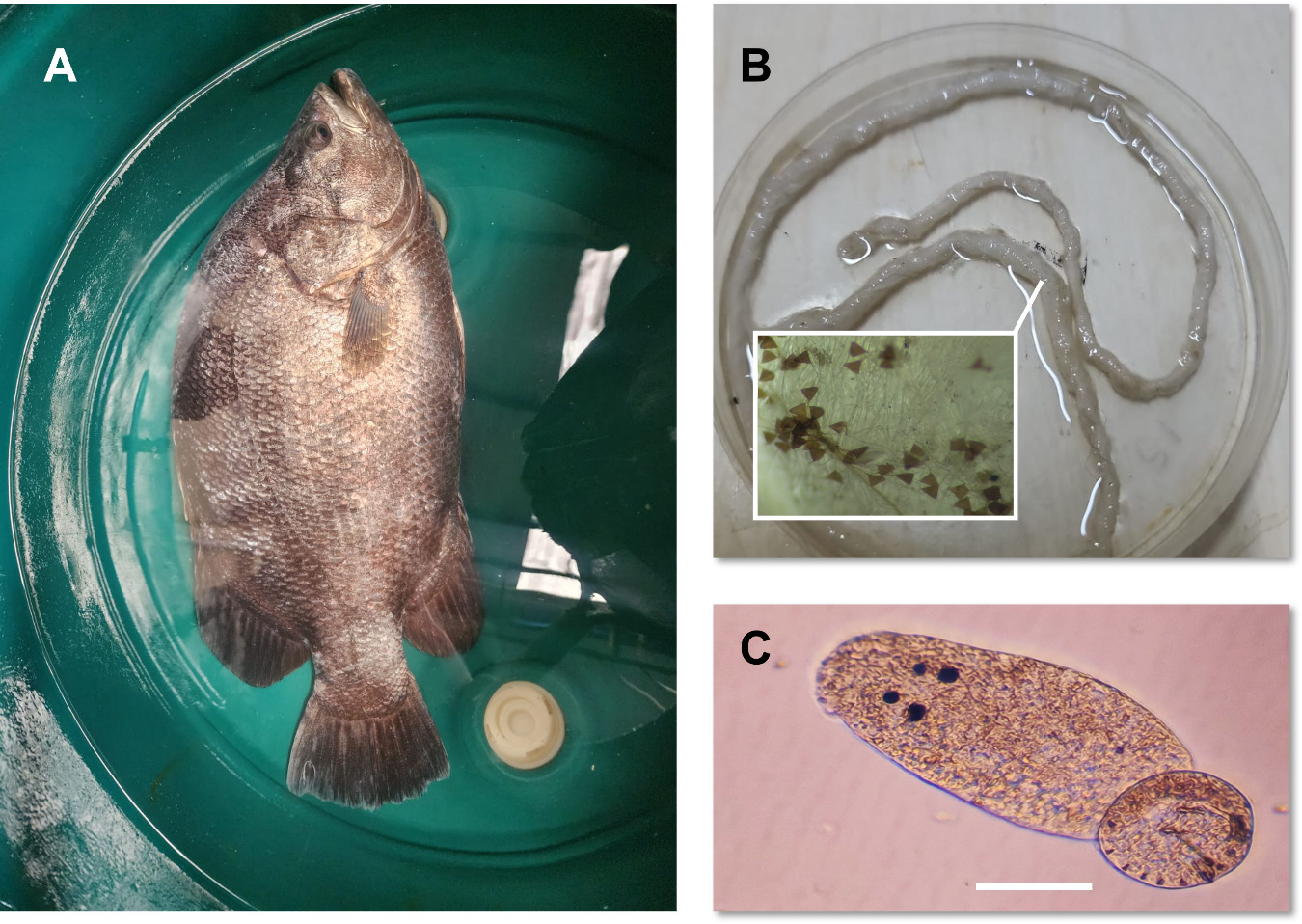
Following parasite identification, an integrated management protocol was implemented, combining temperature-adjusted freshwater immersion treatments and egg monitoring (Fig. 3A and B). Freshwater baths were applied every five days to interrupt successive generations of Neobenedenia sp., considering the accelerated parasite development at the system temperature (27.8 °C).
During the second treatment, small monogeneans consistent with juvenile development stages were recovered (Fig. 3C). The presence of juvenile forms confirmed that egg hatching had occurred within the system after the initial intervention. Successive treatments were therefore maintained at five-day intervals to target newly emerged parasites before reaching reproductive maturity.
Nylon-thread egg collectors were deployed within the tanks following the methodology described by Valles-Vega et al. (2019) and examined at five-day intervals in coordination with the treatment schedule. A progressive reduction in both recovered parasites and eggs on collectors was observed over successive treatments. By the end of the treatment schedule, no further monogeneans or eggs were detected. No additional mortalities were recorded after implementation of the control protocol.
_freshwater_baths_applied_a.png)
DISCUSSION
This study represents the first confirmed report of Neobenedenia sp. and Caligus sp. infesting L. pacificus in Costa Rica. The introduction of ectoparasites through a single wild-caught individual and their subsequent transmission of Neobenedenia sp. to conspecifics highlight the epidemiological risk posed by insufficient or non-targeted quarantine procedures in closed marine systems.
Species of the genus Neobenedenia (Monopisthocotylea: Capsalidae) are known for their direct life cycle, high reproductive output, and resilience under tropical conditions (Deveney et al. 2001). These biological traits facilitate rapid transmission when susceptible hosts are maintained in proximity, particularly under stable environmental conditions typical of recirculating systems (Mera-Loor et al. 2025). Temperature plays a critical role in parasite development; even slight increases may accelerate egg hatching and shorten generation time, increasing the probability of reinfestation (Brazenor and Hutson 2015; Valles-Vega et al. 2019, 2024). Under tropical conditions, these characteristics promote rapid parasite population expansion once hosts are aggregated in confined environments.
A key finding of this study is that dissemination of Neobenedenia sp. occurred following the introduction of a single infested fish, despite the use of a prophylactic freshwater bath following capture. Subclinical infestations in wild-caught individuals may remain undetected during initial inspection yet become epidemiologically significant under captive conditions. In contrast to natural environments, where host density and environmental variability constrain transmission, closed systems amplify infestation pressure due to host aggregation and continuous favorable abiotic conditions. Similar outbreak scenarios have been reported in large display aquaria, where strict monitoring and environmental management were required to control capsalid monogenean infestations (Morales-Serna et al. 2025). These findings reinforce that quarantine functions as a critical biosecurity control point rather than a procedural formality.
Routine prophylactic treatments at arrival may be insufficient if parasite eggs deposited on tank surfaces escape initial interventions. For parasites such as Neobenedenia sp., treatments targeting attached adults do not eliminate eggs, allowing delayed outbreaks following introduction. The recovery of juvenile Neobenedenia sp. after the first treatment in this study confirms the persistence of resistant egg stages and underscores the limitation of single prophylactic interventions. Therefore, effective quarantine protocols should incorporate extended observation periods, repeated treatments synchronized with predicted hatching intervals, and environmental egg-control strategies. The combination of temperature-adjusted freshwater baths and nylon-thread egg collectors successfully interrupted the parasite life cycle, consistent with life cycle-based management approaches reported for aquarium systems (Valles-Vega et al. 2019; Morales-Serna et al. 2025).
Although Caligus sp. was detected, no evidence of transmission was observed during the monitoring period. Nevertheless, caligid copepods are known to cause epithelial damage and host stress, potentially increasing susceptibility to secondary infections (Johnson et al. 2004). Because caligid copepods differ from Neobenedenia in morphology, attachment mechanisms, life cycle and treatment susceptibility, parasite-specific identification is essential to ensure targeted management and avoid incomplete or unnecessary treatments. Several species within the genus Neobenedenia have been reported infesting a wide range of teleost hosts (Whittington and Horton 1996; Brazenor et al. 2018), suggesting relatively low host specificity and increasing the risk of cross-species transmission in multi-species facilities. Consequently, early parasite identification during quarantine allows implementation of targeted therapeutic schedules aligned with parasite biology, improving treatment efficacy and supporting animal welfare.
Given the growing interest in L. pacificus for display systems and aquaculture development in the region, proactive health screening and parasite-specific quarantine protocols should be considered essential components of husbandry in Costa Rica and broader Central America. Although identification in this study was based on morphological characteristics, future research should incorporate molecular tools to confirm parasite species and to better understand their distribution and potential reservoirs in wild populations.
CONCLUSIONS
This study provides baseline parasitological information for L. pacificus in Costa Rica and demonstrates the potential for ectoparasite transmission of Neobenedenia sp. following the introduction of wild fish into captive systems. Parasites carried at subclinical levels in natural environments may proliferate rapidly under captive conditions if quarantine procedures are insufficient.
The findings highlight quarantine as a critical biosecurity measure requiring extended observation, repeated treatments, and life cycle-based management strategies. Strengthening these protocols is essential to minimise parasite transmission risks in marine display systems and future aquaculture operations involving wild-caught fish.
Acknowledgements
We would like to thank Parque Marino del Pacifico, Puntarenas, for providing us with specimens for review and taxonomic identification. Silvia Valverde (UNA) provides reagents for staining the Neobenedenia sp. specimens.
Author contribution
Isabel Valles-Vega led the study, performed parasitological assessments, coordinated treatment, analysed and interpreted the data, and wrote the manuscript. Tifanny Corrales-Rodríguez contributed to sample collection, preparation, and microscopic analysis. Ángel Herrera-Ulloa and Jonathan Chacón-Guzmán provided facilities and reagents. María Isabel Abdo-de la Parra, Ángel Herrera-Ulloa, and Jonathan Chacón-Guzmán reviewed the manuscript and provided comments.
Conflict of interest
The authors declare that there are no conflicts of interest